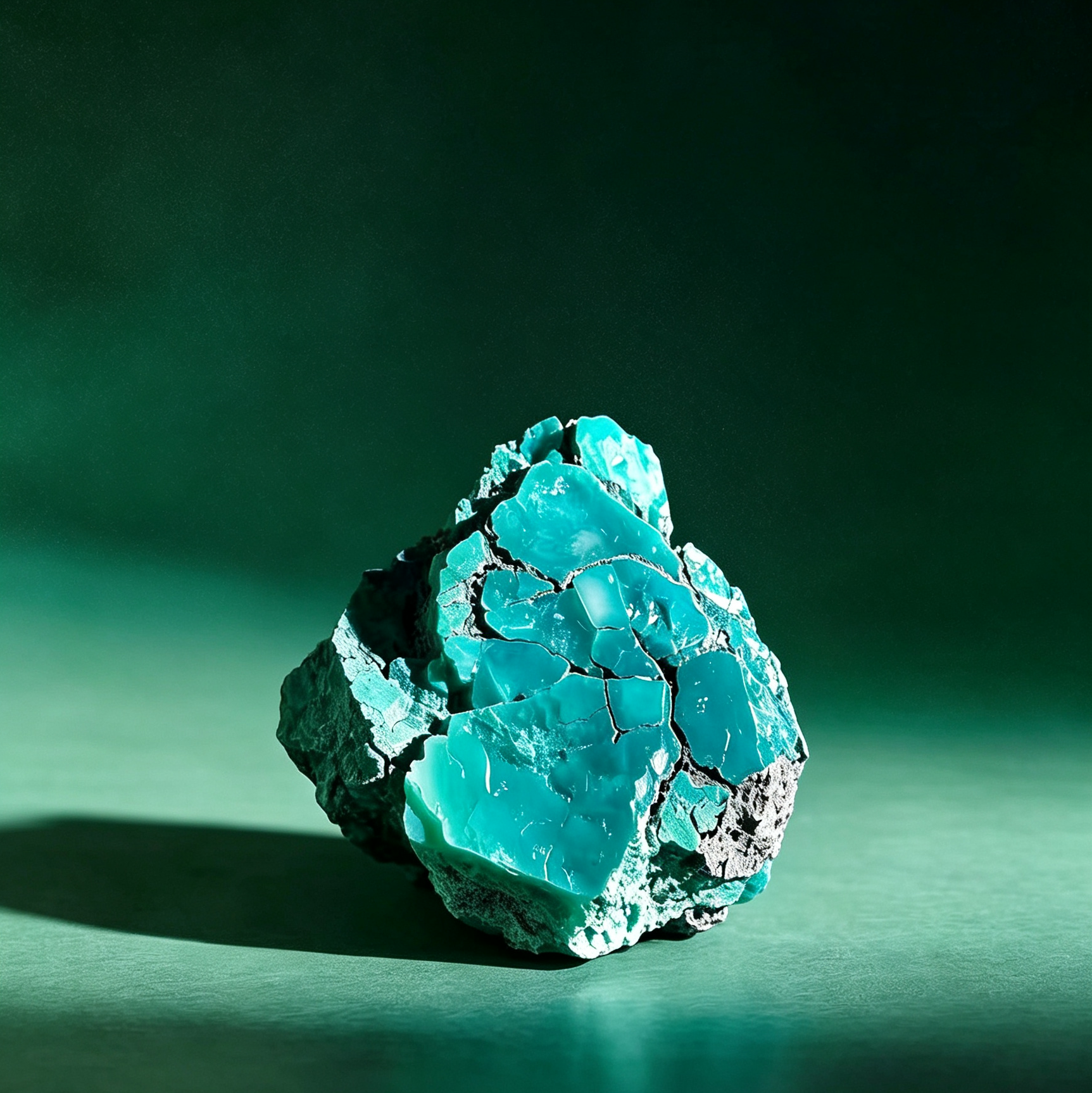
Turquoise: Meaning, Properties, History and Jewelry Guide

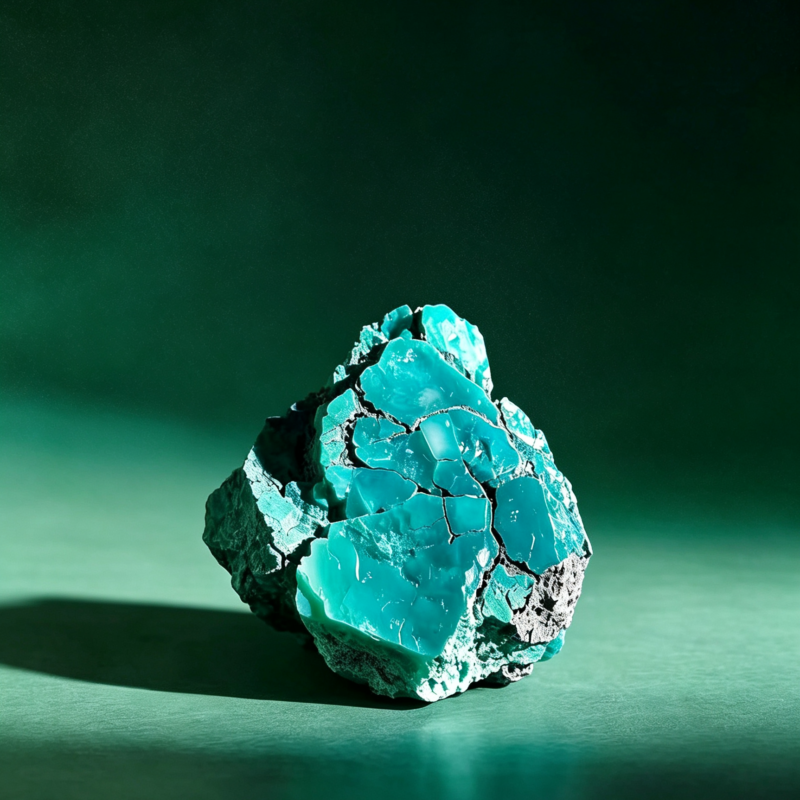
What Is Turquoise?
Turquoise is one of the world’s oldest and most beloved gemstones. Known for its blue, blue-green and green colors, it has been used in jewelry, amulets, carvings and ceremonial objects for thousands of years.
Although its English name comes from the French phrase meaning “Turkish stone,” turquoise is not named because Turkey was a major source. Historically, fine turquoise from Persia traveled through Turkey into Europe, which influenced the name used in Western languages.
Turquoise is a hydrated copper aluminum phosphate mineral. Its color is closely connected to its chemical composition: copper contributes to blue tones, while iron can create greener shades. This gives turquoise a wide color range, from sky blue and robin’s egg blue to greenish blue and yellowish green.
Today, turquoise remains popular in fine jewelry, bohemian designs, Southwestern jewelry, Tibetan-style accessories, crystal collections and handmade gemstone pieces.
A Gemstone with Ancient History
Turquoise has a long cultural history. It has been valued by ancient Egyptians, Persians, Native American cultures, Tibetan communities and many other traditions.
Across different cultures, turquoise has often been associated with protection, luck, success, status and spiritual connection. Ancient people used it in amulets and ornaments, while modern jewelry designers continue to celebrate its vivid color and organic texture.
Turquoise is also recognized as a December birthstone and is commonly associated with Aquarius and Sagittarius in modern zodiac gemstone traditions.
Turquoise Mineral Properties
Unlike obsidian, turquoise is a true mineral with a defined chemical formula and crystal system.
Key properties:
- Mineral type: Hydrated copper aluminum phosphate
- Chemical formula: CuAl₆(PO₄)₄(OH)₈·4H₂O
- Crystal system: Triclinic
- Mohs hardness: Usually 5–6; porous material may be lower
- Specific gravity: Around 2.60–2.90
- Refractive index: About 1.610–1.650
- Luster: Waxy to vitreous
- Transparency: Opaque; very thin pieces may be slightly translucent
Turquoise is naturally porous. Because of this, many commercial turquoise stones are stabilized with resin or wax to improve durability and color stability. Stabilization is common in the market, but treatment status should be clearly disclosed.
Turquoise Color and Appearance
Turquoise is best known for its blue to green color range.
Common colors include:
- Sky blue
- Persian blue
- Robin’s egg blue
- Blue-green
- Green turquoise
- Yellowish green
In general, evenly colored blue turquoise is often considered highly desirable, especially when the texture is dense and smooth. However, many people also love turquoise with natural matrix patterns.
What Is Matrix in Turquoise?
Matrix refers to the host rock or veining visible inside turquoise. It often appears as brown, gray or black lines running through the stone. These lines may form irregular patterns, web-like structures or natural patches.
One of the most popular matrix styles is spiderweb turquoise, where the dark matrix creates a network-like pattern across the blue or green stone.
Matrix can add character and uniqueness. A clean, no-matrix turquoise has a classic pure look, while spiderweb turquoise has a more earthy and distinctive appearance.
Turquoise Types and Grades
Turquoise can be described by color, texture, source and matrix pattern.
Common descriptive categories include:
Persian-Style Turquoise
Known for fine sky-blue color, smooth texture and minimal matrix. This style is often associated with classic high-quality turquoise.
American-Style Turquoise
Often blue to blue-green, sometimes with attractive matrix patterns. Turquoise from the American Southwest is especially well known in jewelry design.
Green Turquoise
Green turquoise contains more iron influence and can range from soft green-blue to deeper green tones. It is popular for earthy and natural jewelry styles.
Spiderweb Turquoise
This type has dark matrix lines forming a web-like pattern. It is highly recognizable and often used in statement jewelry.
Porcelain-Like Turquoise
Dense turquoise with a smooth, polished surface and bright luster is sometimes described as having a porcelain-like appearance.
Turquoise Meaning and Symbolism
In crystal and cultural traditions, turquoise is often associated with protection, success, communication and good fortune.
Many people believe turquoise symbolizes:
- Protection during travel
- Success and victory
- Clear communication
- Emotional balance
- Good luck
- Spiritual strength
Turquoise is also commonly linked with the throat chakra in modern crystal practices because of its blue color and association with communication and self-expression.
These meanings are symbolic and traditional. They should be understood as cultural beliefs rather than scientific or medical claims.
Turquoise in Jewelry
Turquoise is one of the most versatile gemstones in jewelry design. Its color works beautifully with silver, gold, leather, pearls, coral and other natural stones.
Turquoise Necklaces
Turquoise necklaces can range from delicate minimalist pendants to bold beaded strands. Blue turquoise pairs especially well with sterling silver.
Turquoise Bracelets
Turquoise bracelets are popular in bohemian, Southwestern and Tibetan-inspired styles. Beads, cuffs and inlay designs are all common.
Turquoise Rings
Turquoise rings are eye-catching and often used as statement pieces. Because turquoise can be porous and softer than many gemstones, rings should be worn with care.
Turquoise Earrings
Turquoise earrings add a bright pop of color and can be designed in modern, ethnic, vintage or handmade styles.
Curio and Beaded Accessories
Turquoise is also used in prayer beads, spacer beads, carved pieces and decorative jewelry components.
How to Choose Turquoise
When buying turquoise, consider color, texture, matrix, treatment and craftsmanship.
Look for:
- Attractive blue or green color
- Smooth and dense texture
- Good polish
- Natural-looking matrix
- Clear treatment disclosure
- Strong craftsmanship in the setting or beadwork
Color preference is personal. Some buyers love pure sky-blue turquoise, while others prefer green tones or dramatic spiderweb matrix.
Natural, Stabilized and Dyed Turquoise
Because turquoise is often porous, treatment is common.
Natural Turquoise
Natural turquoise has not been stabilized or dyed. It may be more sensitive to oils, cosmetics and moisture.
Stabilized Turquoise
Stabilized turquoise is treated with resin or wax to improve durability. This is common and acceptable when disclosed honestly.
Dyed or Imitation Turquoise
Some materials are dyed to imitate turquoise. Dyed howlite, dyed magnesite, dyed chalcedony and synthetic materials may be sold as turquoise if not properly labeled.
How to Identify Turquoise
Basic identification clues include color, texture, hardness and matrix structure.
Natural turquoise usually shows:
- Slightly uneven natural color
- Waxy to vitreous luster
- Opaque body
- Natural-looking matrix
- Dense but not glassy-plastic texture
Possible imitation signs include:
- Color looks too uniform or artificial
- Cracks show darker dye concentration
- Surface feels plastic-like
- Material is too transparent
- Matrix looks printed or painted
A hot needle test is sometimes mentioned for plastic-impregnated imitations, but it can damage the stone and should not be used on finished jewelry. For valuable pieces, professional gemological testing is the safest approach.
Main Sources
Important turquoise sources include Iran, China, the United States, Egypt, Mexico and Chile. Persian turquoise from Iran is historically famous for its blue color. China is also an important turquoise source, especially Hubei Province. The United States, particularly Arizona, has produced well-known turquoise used in Southwestern jewelry.
Turquoise Care Guide
Turquoise requires gentle care because it is porous and can absorb oils, sweat, perfume and chemicals.
Care tips:
- Avoid perfume, lotion and cosmetics
- Do not soak for long periods
- Clean with a soft dry or slightly damp cloth
- Avoid ultrasonic cleaners
- Store away from harder gemstones
- Remove before swimming, bathing or cleaning
Proper care helps preserve the color and surface quality of turquoise jewelry.
Final Thoughts
Turquoise is more than a beautiful blue gemstone. It carries ancient history, strong cultural symbolism and a distinctive natural appearance. From clean sky-blue stones to dramatic spiderweb patterns, turquoise offers a wide range of styles for jewelry lovers and collectors.
Whether chosen as a December birthstone, a symbolic protection stone or a colorful jewelry centerpiece, turquoise remains one of the most timeless gemstones in the world.
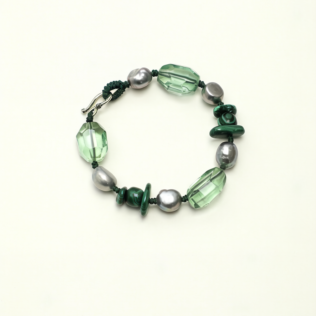
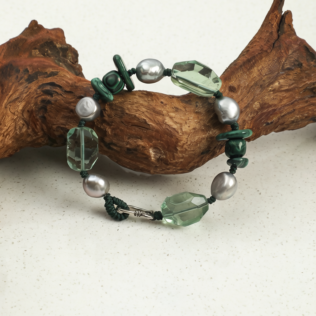
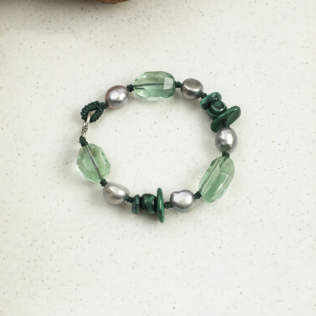
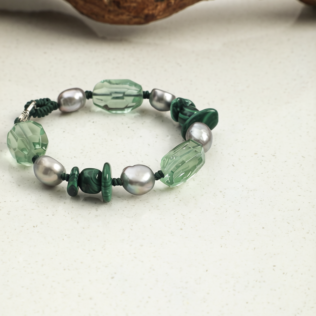
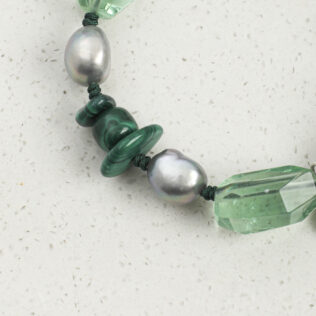
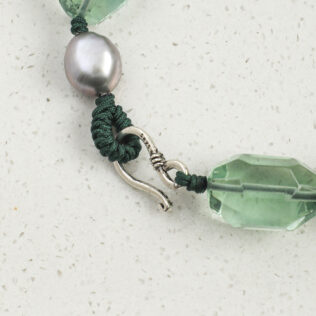
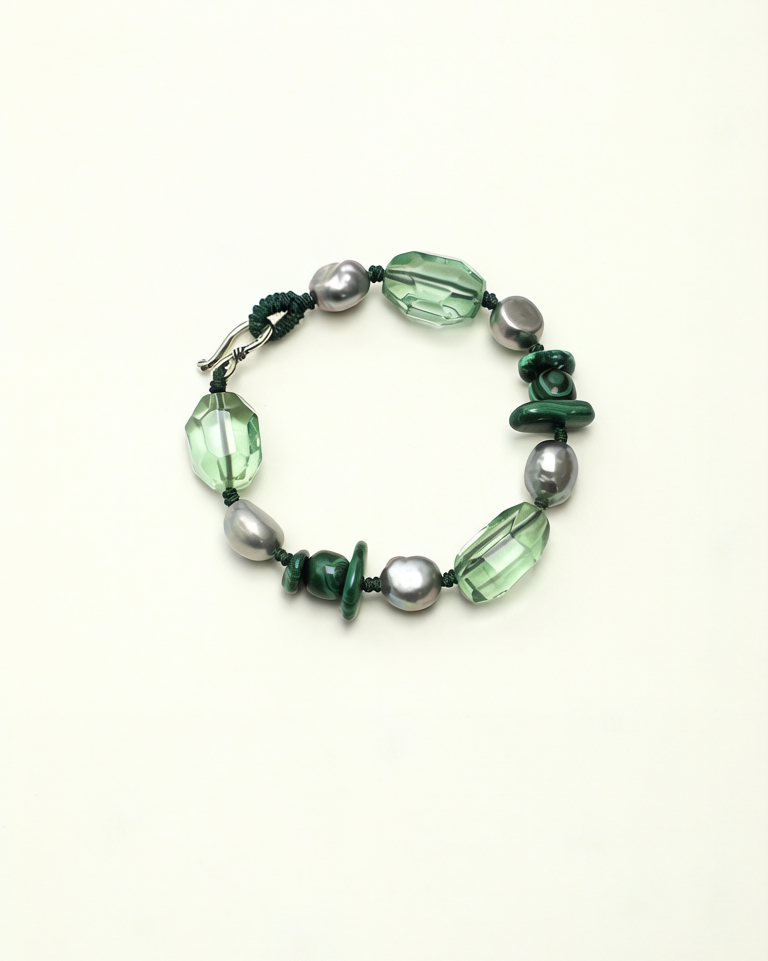
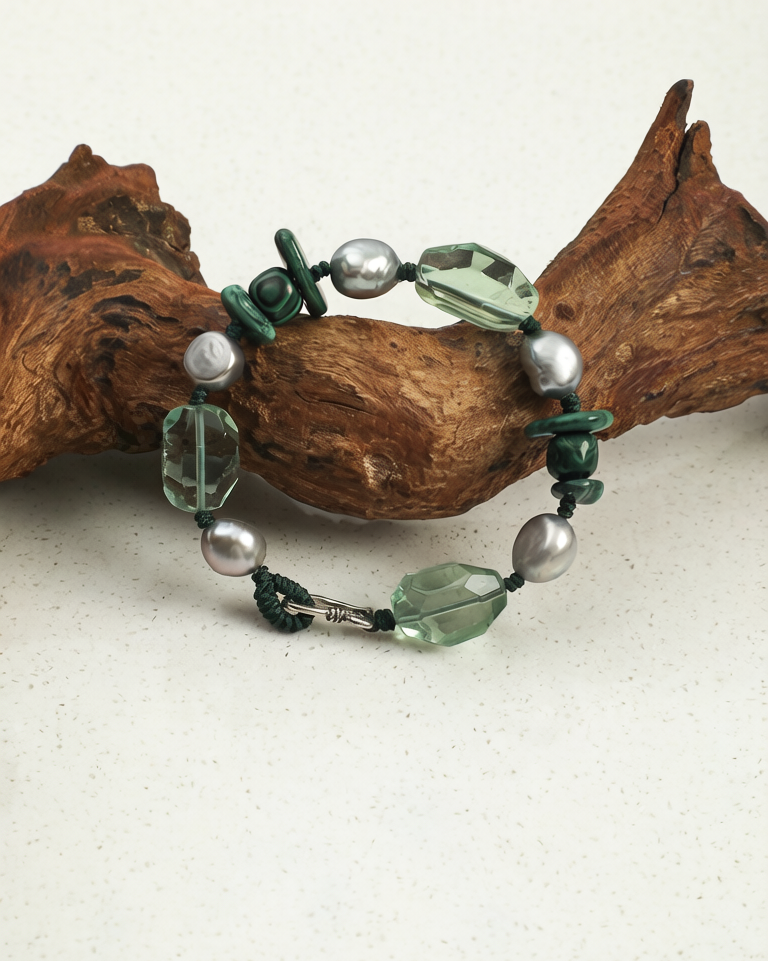
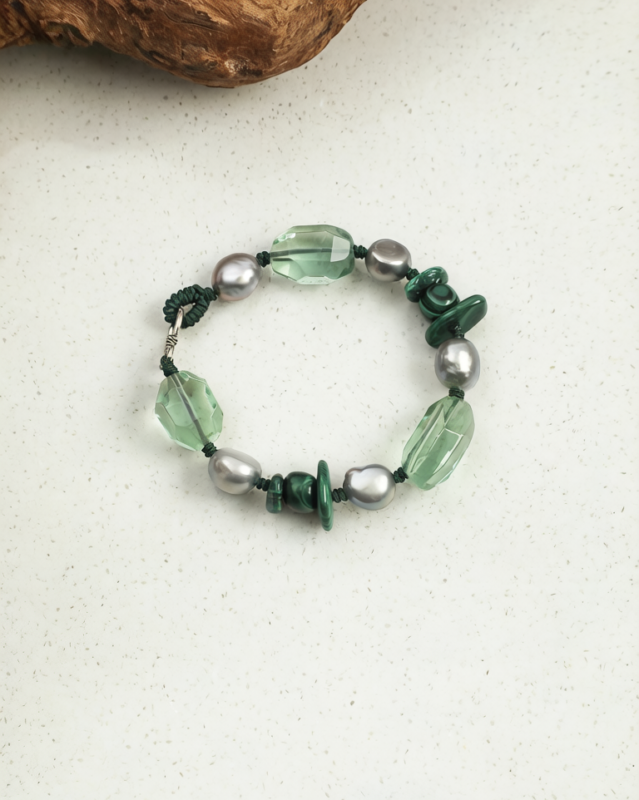
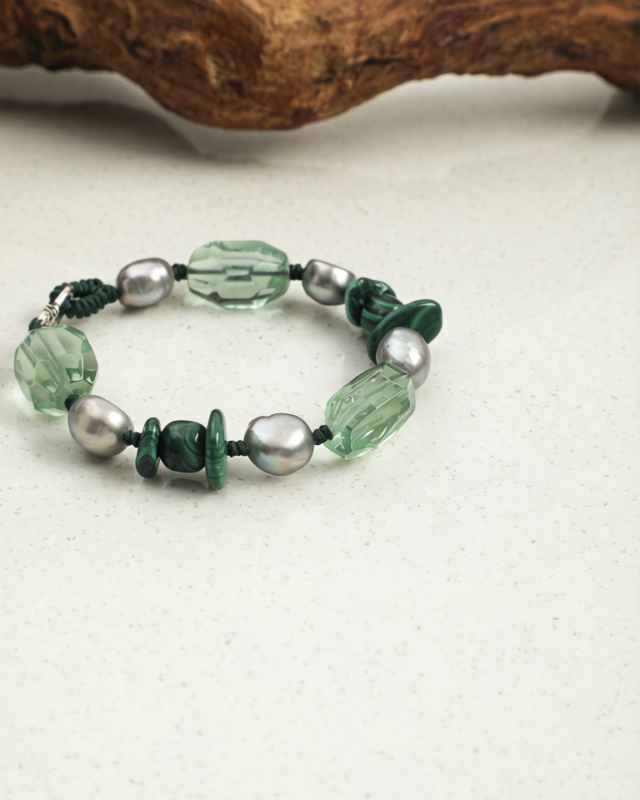
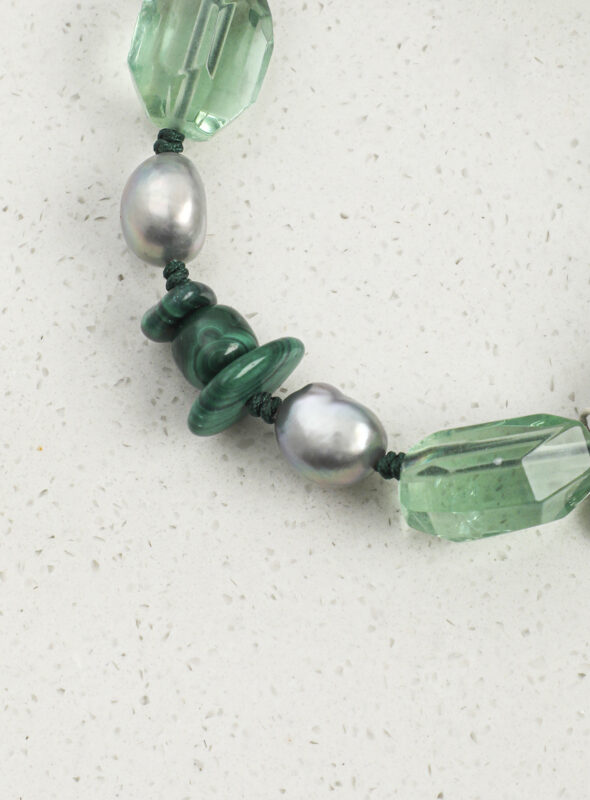
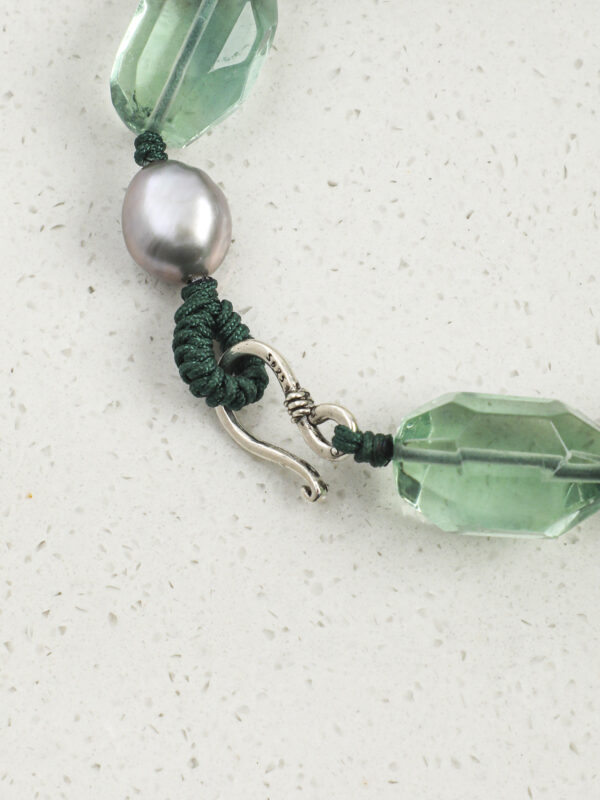
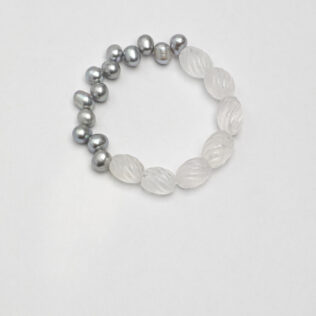
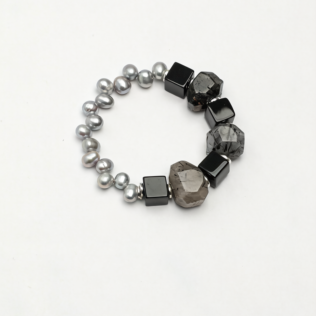
SANSUN Malachite Green Fluorite Grey Pearl Bracelet – Detox & Heart Healing | Black Friday Sale
A handcrafted malachite and green fluorite bracelet featuring grey baroque pearls and Thai silver details. Inspired by nature’s colors and organic textures, this unique piece blends earthy elegance with timeless beauty.